Thursday, February 20, 2014

A Sailing Parody

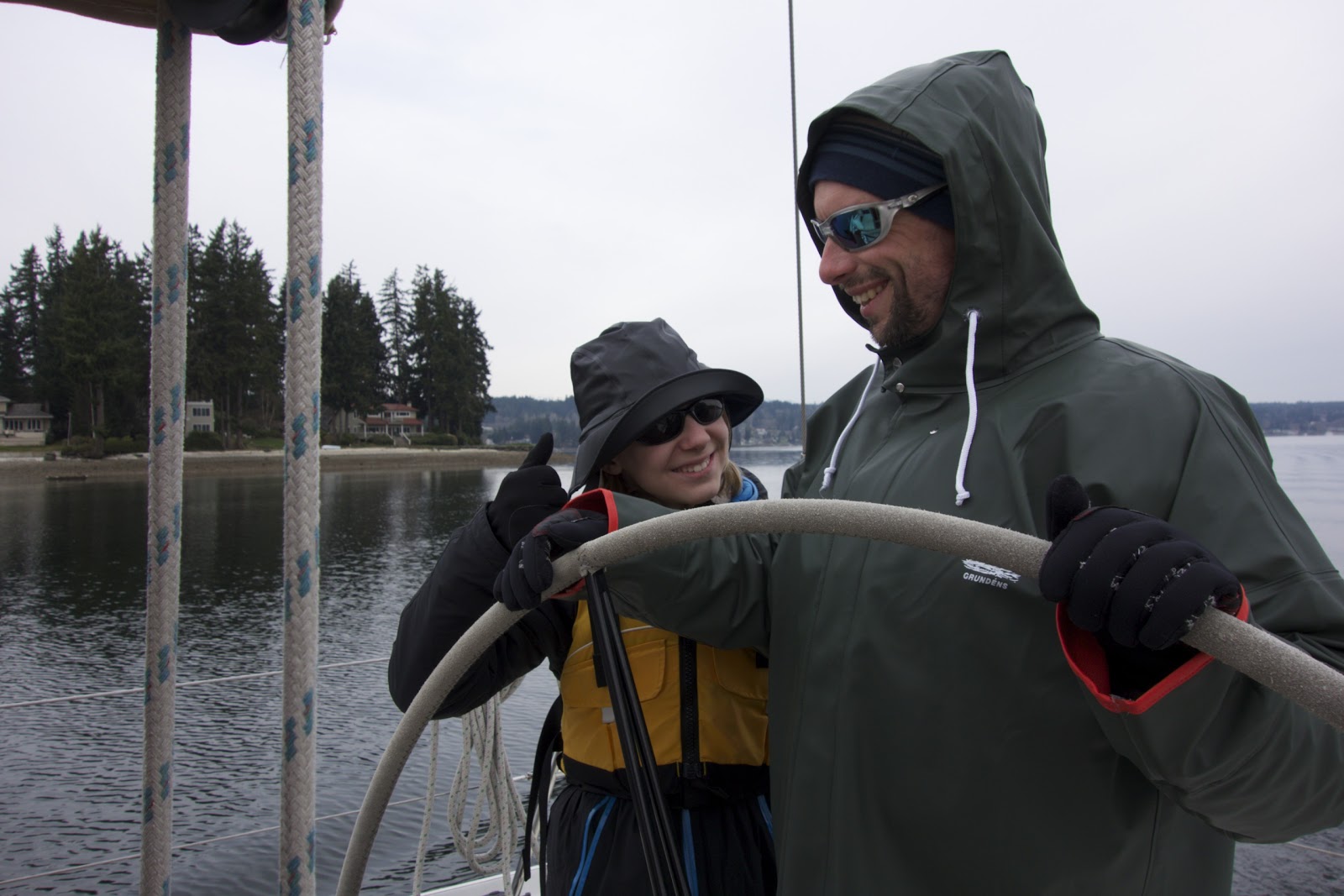
It's amazing how much the kids pick up while on the road or under sail. Check out our homeschoolin' fourteen-year-old's story about a sailing trip gone wrong. Hopefully this isn't a reflection of our sailing skills.


A Sailing Parody

Authors note: A few words have been censored. You will find bleeps where they used to be.

Port Townsend. A lovely town, full of tourists and sailors. A starting point for many long journeys. Many sailors say to their friends, “You know what always reminds me of my journey? That paper mill that’s putting all those bloody fumes in the air, that’s what.” This probably has nothing to do with Port Townsend’s booming paper mill. At least, I think it doesn’t.

I hadn’t known what to think for the past week. I was so excited for my voyage, but for some reason, the fuel pump exploding and decimating various important parts of the engine had me wondering if it was such a good idea after all. Of course, the guys at the yard said they’d have the hole filled up in no time, as soon as they could figure out where they put their concrete. This had not inspired me with confidence, filling a hole in a wooden boat with concrete, but I suppose that I should trust the experts more. At least they also said that the rusted bolts that hold the shrouds to the boat are so corroded that they won’t budge. That was quite good news to my poor younger self. I figured that I didn’t need to buy new ones, that the old ones would hold.

Anyway, entirely trusting in the experts, like the young fool I was, I sailed out of Port Townsend with a concrete patch in my hull and rusted bolts holding the shrouds on, and probably some other stuff that the experts had ‘replaced’.  I vaguely wondered why my engine sounded like an old man choking on his heart pill, but I was too caught up in the pride of the moment to notice. Here I was, a young, brave adventurer, out sailing on my new boat. I saw a friend of mine wave from his old wooden schooner. I waved back, smiling like a madman. I was going out on a voyage. I couldn’t believe it. The only thing that would make it better was if someone sounded a horn to celebrate my going. As I left the marina, a horn sounded. I nearly burst from pride. But, perhaps I should rewind a bit, and tell the reader why I was so prideful.

My father had a boat up in British Columbia, in Sydney. We used to go out sailing in the summers and on weekends, if we had time and it was warm enough. Of course, Father considered zero degrees and above to be warm enough. This may have been a reason for his divorce. It toughened me up, though. I have such happy memories of trying to scream something at Father while 35 degree water broke over the bow and washed into the cockpit, usually something insulting about his lineage and mixed with the dirtiest words of the time. Of course, it was rarely uttered, due to the unfortunate circumstance of my tongue being frozen to the roof of my mouth, but I would try anyway.

My sailing days with him ended abruptly when father came home from sailing one day with pneumonia, frostbite, a strange infection of the tongue that involved it sticking to the top of his mouth, and various other things. Ever since then, he’s watched TV and read newspapers and golfed, just like every other old man I know. I was so disappointed, especially when I asked him what he was going to do with the boat. He said, nothing. I asked if I could have it. He informed me that it was at the bottom of the ocean, and it would stay that way if he had to personally dynamite every recovery boat that even thought of dredging it up. I figured he was a little irritated over his tongue infection, which had not entirely healed.

A few months after that encounter, I left for college. A year later, I was failing miserably, and blaming it on brain cells that had frozen to death and were never replaced. Of course, my teachers didn’t believe that, especially my neuroscience teacher. I went right on getting taught. I needed a break. I contemplated quitting college and going to the Rocky Mountains to ice climb with buddies. I was dissuaded when a friend came back with an interesting tongue infection. Then, I remembered sailing. That day, I left the UW campus in search of a yacht broker. I found one. His name was Bill, and he specialized in old, cheap boats. I asked to see what he had in stock. He looked at me strangely for some reason, then drove me to Lake Union. He showed me a nice old boat, the Peregrine. A nice name, I thought. “I’ll take her,” I said. I forked over ten thousand bucks to a beaming owner, then turned to admire the Peregrine.

She was beautiful, in a chunky sort of way. Oh, she was a bit beamy for my tastes, but I was sure I’d learn to like that. And it came with a lot of room inside, which was a bonus. And perhaps her bow was a bit bluff, but that was probably good for bashing through waves. I wish that someone had come and slapped me right then, and told me you want to flow through the waves, not bash through them. But no one did.

I stared at my boat in awe. It was mine. She was mine, I corrected myself. I had gotten a little rusty in sailing terms in the year and a half after my father’s boat sank.
I sailed, or more precisely, motored her, by myself, through the Ballard Locks. She turned out to be a cranky old boat, hard to turn, but turning all too well when you were trying to hold a straight course. But I loved her, because she was my boat, and I could sail wherever I wanted with her.

Once through the locks, and out in Puget Sound, I decided I would raise some sails. I motored past a buoy. It was a red one, and I tried to remember the saying. Was red right leaving? Or red right returning? I assumed the latter, since it was catchier, and went to the left. My decision was correct. I only ran aground once getting out of the channel.
Out in the Sound, I decided to raise some sails. I tied the tiller, prayed to God that the course would hold straight, and scrambled up to the mast. I stared at the different halyards and lines and sheets, trying to remember which halyard was connected to the mains’l. Then, I remembered that my father had always attached it to the base of one of the shrouds, and turned around. There it was! I grabbed it, undid the bolt, and slid it over the top of the mains’l, and made it fast. Then, I realized that I didn’t know which winch to wrap it around, and I had also forgotten to see if the boat had a winch handle on board. I went back to the cockpit. Luckily, there was an old, rusty, battered winch handle in the cockpit, which I grabbed. I trotted back to the mast, and raised the sail with the winch. Under one sail, I decided to relax a little. I won’t go through me realizing I had no supplies, or the shopping, or the realization that what I really wanted to do was sail from Port Townsend to Mexico, then to Hawaii, and back.That was how I found myself in Port Townsend in a boat.

As I marveled at the fact that someone had blown a horn at my going, my friend, Pete, came up the companion way. He looked over my shoulder and shouted, “What the bleep!” I glanced over my shoulder. There, a Washington State ferry was tooting its horn frantically at me, and coming on at something over 15 knots. I screamed, and yanked the tiller over, forgetting that it was a tiller, not a wheel. The Peregrine turned in completely the opposite direction I wanted to go, starboard instead of port. I frantically pushed the other way, and she heeled over as she turned, then righted herself. The ferry passed by, too close for comfort, still tooting its horn, while tourists waved down at us. I was too weak from shock to wave back. Pete, however, was glad of the attention, and waved back. At that point, I knew where the horn had come from.

Pete was a friend of mine at the time. Our fathers had been sailing buddies, so Pete had had some experience sailing. Pete and I never really got along until we both realized that we loved neuroscience. In fact, we were leading experts in neuroscience. We were always coming up with new ways to prove our theories, but the professors always lifted their eyebrows at our new evidences, and then told us, flat out, that there was no such thing as a frontal attention cortex, and even if there was, there was no way it could be infected with an icy growth, since such a thing did not exist. This was too bad, since I was hoping I could get a refund on all those months I had spent in college spacing out. I could do it at home for free, but if you do it at college, it can cost you thousands.

But this is me wandering again. I’m always wandering. I once went wandering while we were sailing, and ended up in a coast guard patrol boat with hypothermia. And another time, I went wandering in the suburbs of Seattle. It was Pete who rescued me that time. He was a bit proud about that, and I was severely compromised. On the one hand, I wanted to tell him that since it was in his own backyard, it wasn’t much of a rescue. But then I would have to admit that I had to be rescued from someone’s backyard. So Pete and I devised a story full of ghost bears and evil otters with laser guns. No one believed us, of course, but it was worth a try. Pete was that sort of kid; he was always wanting to build upon his glory, and he would build it so high, it would collapse.

That’s why he accepted my offer to go on a voyage so eagerly; he figured he could boast about a voyage, but knowing him, his stories would have been full of pirates and the coast guard valiantly saving us at the last minute, machine guns blazing, and someone shouting orders in that loud, carrying voice you always hear in Hollywood. Of course, we would have picked off some pirates with the large rifles we had happened to bring with, in his story. Hopefully, that gives you something of an insight into Pete’s character.

We had raised sail somewhere between Port Hudson and Mid Channel Bank, a series of rocks north of Marrowstone Point. We sailed up to Point Wilson, and there we had our first problem of the trip.

Neither​ I nor Pete had known that at about this time of day, when the tides were running like this, tide rips formed past Point Wilson. We learned at this point, though.​​
I had an exchange with Pete about what to do next. It went as follows;
“There’s tide rips up ahead,” I said.
Pete looked up from his book. “Yeah?” He said.
“Yeah,” I said.
“Okay,” He said, and looked back down at his book.

We hit the tide rips right about then. A noise like a lot of water bashing against a wood and concrete hull filled our ears. A mysterious howl rose in the air as I wrestled with the tiller.
After we were through, I realized that this had been Pete screaming, but at that point, I thought that there was an unholy alliance of the water and air gods, and they were trying to destroy the poor Peregrine. The sails were flogging back and forth as the wind shifted, or rather, as we spun around in circles. We were being pushed towards the shore. I shouted at Pete to take the jib down, while I turned on the motor and tried to wrestle us out of the tide rips. For some reason, the unearthly howling noise stopped as Pete began to winch in the jib. I shouted at him to tighten down the mainsheet, which he promptly did. Now with the motor on, and the mainsheet tightened down, we were able to make slow progress out of the tide rips.

Once we were out Pete sat down with a thump, and picked up his book. I managed to catch a glimpse of the title as he turned away. ‘Mutant Ninja Vampire Frogs’, was the title. I thought that was strange, at the time, but figured there was no accounting for some people’s tastes.

We were now out of Admiralty Inlet, and out on the Strait of Juan de Fuca. I thought it was cool that we had made it this far without sinking, but Pete seemed to think that it had been nothing. He pointed out that we were still only six miles from Port Townsend. I was reluctant to admit that, but he had started reading again before I could admit it, so I let it drop.
Two days later, we were out of the Strait of Juan de Fuca, without anything bad happening once. I was excited. Pete seemed nervous. I had begun fishing off the back of the boat, but the one time I caught something, it had attempted to bite my toe off and then had flopped back in the sea.

Pete laughed at my screaming, and pointed out that it was a very tiny fish, but when I offered him the fishing equipment, he was suddenly very eager to go down and make the tea, which was something that made me feel worried for his health, since he was so eager to not make the tea most of the time. I didn’t argue with him though; I wasn’t particularly fond of making tea. When he came back up with a tea cup in both hands, I pointed out some huge dark clouds off in the distance.

“Think we ought to be worried?” I asked.
Pete glanced at them and said, “Nah. We’ll be in a port by the time those reach us.
I wasn’t so sure. They seemed awfully big, and they were moving quite fast. “But, Pete,” I said. “Our next port is over forty miles away.”
Pete looked thoughtful. “Very true,” he said.
He stroked his beard, and looked towards the huge storm clouds looming to starboard.
“Well,” he said reluctantly. “I suppose we had better start prepping for the storm.”

He went down below to begin tidying up. I looked up at the sails, and wondered how strong the winds would be. The cup of tea sat unnoticed in my hands as I stared at the sails. How long till the storm hit? By the looks of it, we had thirty minutes, maybe an hour at most.
The wind had been gradually picking up this entire time, until it sat at something like fifteen knots. The Peregrine was making good way, going five and a half knots, and heeling over to perhaps twenty five degrees. I stared at the storm clouds, and called for Pete to bring me the VHF. When he brought it up, I took it, and, still staring absently at the storm clouds, I switched to the weather channel.

The recording of a woman sounding like a computer came on. I paid it no mind, until I heard, “For the mouth of the Strait of Juan de Fuca…” I listened intently. “…there will be gale force winds of fifty knots, with gusts up to sixty five from 13:45 to 18:00. Storm conditions will continue into the morning. Wave height will be between ten and twenty feet. For the Strait of Juan de Fuca…”

I tuned out at that point, furiously calculating in my head. If there were such high winds, and we were under double reefed mains’l and storms’l, then we could probably go seven knots, making the amount of time it would take to get to our next port about seven hours. It was about one o’clock PM, which meant we would be in by eight o’clock, if nothing went wrong. We had perhaps thirty five minutes by this point, but there was no telling when the storm would really hit. The wind had risen to twenty.

Pete was back up top, with stout rubber boots on and water proof pants, and was shrugging into his rain jacket. He then proceeded to buckle on a harness, one of the new ones I had purchased in Seattle. I mentioned the weather forecast to him. His eyes widened momentarily, then he shrugged.
“We can handle it,” was all he said.

The wind was still picking up, and Peregrine was heeling over more. I kept my hands tight on the tiller, and asked Pete to go put the first reef into the mains’l. He went on up to the foredeck, stumbling as the boat tossed him around. As the mainsail began to come down, a gust of thirty five hit, sending us into a heel of forty five degrees before we righted. And then Pete was coming back from the foredeck, soaked from spray. He came into the cockpit and spluttered as a wave crashed into the cockpit and hit both of us full in the face. I decided that it was time to put a second reef in the main before the wind got too powerful. When I told Pete, he nearly bit my head off, which was why I found myself up on the foredeck getting soaked. I clipped myself onto a shroud, and dropped the sail part way down the mast. I tied the reefing line to a hitch, then winched up the sail until the line was tight. Then I scrambled back to the cockpit, and dropped in. It began to rain. Pete looked slightly smug when he saw how soaked I was. I glared at him, then began to winch the jib in. It then occurred to me that I had no idea how to replace it with the storms’l, so I double reefed it and left it at that. Then I sat back. Now all that we had to do was sit out the storm.
It hit us. Wind howled through the rigging as Peregrine bashed through the waves. Pete hung off the leeward side, then came back up, looking ill. I grabbed the tiller, and both Pete and I wrestled to keep a straight course. It was awful, trying to go up into the wind, into the waves. Finally, I decided I had quite enough, and, while going down the backside of a wave, turned her about.

The motion was much easier, and we sat there for I don’t know how long until Pete said, “Isn’t that shore ahead?” I peered up ahead. It was shore. I said, in a voice that sounded calmer than I really was, “Pete, we’ve got to do something! What do we do? What do we do?” Pete wasn’t sure. At least, that’s the impression I got from the way he was staring at the shore, slack jawed. I took a hold of myself. “Pete, we’ve got to get the sails down. I’ll start the engine while you winch the jib in,” I said, or rather shouted. Pete jumped then scrambled towards the winch. I turned the engine key. The engine rumbled to life, squealed, and died. I frowned at the key. I tried again, and the engine gave a wheeze before dying again. The jib was winched in.

I told Pete to go down below and check the engine, and see what was wrong. He climbed down below, muttering to himself, while I gloomily watched the shore get nearer.
After a moment, Pete shouted up, “Ok, turn the engine on.”
I turned the key. The engine rumbled to life, and stayed on for an entire five seconds, before there was a loud, ‘Pop!’ and it died yet again. Pete came up the companionway, bleeding from multiple small cuts on his face, saying “Bleep bleep bleep bleep bleep!”
“What happened?” I exclaimed.
“The bleep fuel pump blew up in my face!” Pete shouted back. I gulped.
The engine was out of commission.
“Unfurl the jib,” I said faintly.
Pete nodded and scrambled to the winch. The jib began to unfurl. I watched it. Pete stopped it at a double reef, and tidied the line. Then, he glanced at me.
“Shall we turn her about?” he asked. I nodded.
I began to turn her about, while Pete kept the boom from swinging around to hard. The jib flogged a moment before Pete pulled it in. Now, bashing through the waves, trying to keep up into the wind, I said, “I think we should head back for Sooke.” Pete only nodded.
“Ready about?” I said.
“Ready,” said Pete.
“Helms alee!” I cried, and pulled the tiller towards myself.
Slowly, Peregrine came ‘round, and then stalled.
“C’mon!” I said through gritted teeth. “Just a little further!”
Finally, jib flogging, she came around and settled on the opposite tack. I breathed a sigh of relief. Pete winched the jib in slightly, then sat back. Keeping my hands tight on the tiller, I wrestled to keep our course straight.

Pete was utterly exhausted by now. I felt utterly exhausted, too. Pete went down below to put some bandages on his face, and came back up, saying, “There’s three feet of water in the bilge, and it’s rising!” I looked down below. Sure enough, a few inches of water was sloshing about on the floor. I thought it must be because of the planks working; they had done that on all the old ships, so there was no reason for it not to be true on my old wooden cutter. And now we were rounding Cape Flattery, towards the relatively calm waters of the Strait of Juan de Fuca. Then, we ran aground. I lurched forward in my seat, then fell back into it. Pete fell face first onto the cockpit floor. Poor old Peregrine was heeling over sharply, with the waves lifting her up and pounding her onto the rock. I was sure her side would cave at any moment, and we would drown. Pete was scrambling to his feet, shouting, “The radio! Call the bleep coast guard!” I reached for the radio. The waves lifted us up, and pounded us back onto the rock. I raised the radio to my mouth, and my mouth began to open. An especially large wave came in, raised us up, and began to bring us back down again. I was sure we were done for. The wind whistled through the shrouds, and I seemed to hear the low booming of water on rock even better than before. My skin was tingling; adrenalin, I supposed. All I could see and feel was the water coming up towards us, and the feeling of my stomach in my throat. Then the wave was passed, and we were floating again. I closed my mouth. I realized I had been screaming incoherently into the radio. I vaguely wondered what the coast guard would make of that. But I didn’t care. I was still alive! I threw up over the leeward side. Then, scrubbing my mouth with the back of my hand, I let the main out, and, while Pete took the tiller, adjusted the jib to downwind sailing. As I sat back down, I said, “You know what? This big ocean sailing isn’t for me. Let’s go to the San Juans and hang out there, and then we can go back to Seattle.” “Yes,” said Pete. “Yes, I like that idea.”

Monday, February 17, 2014

Stockholm


Watery Stockholm rests on a cluster of fourteen islands connected by fifty-seven bridges and as our taxi drove us through the dark, lights shimmered off the waterways that snake throughout the city. He deposited us at our former-army-barracks-turned-hotel located on the small island of Skeppsholmen. After a long day on the train nourished only by the saffron buns and oranges that Anita had thoughtfully packed for us, we were hungry and tired so we settled into a table at the hotel to enjoy a feast from their Julbord otherwise known as Christmas table. The waitress walked us through the extensive buffet instructing us on the proper order to eat each course. Following her instructions, we dove into the pickled herring course. There must have been ten different varieties and we tried one of each. It was a good experience but I think I need to consume pickled herring in moderation and the boys think for them, maybe pickled herring not all. Next was the fish and egg course followed by the cold cut meats and cheese course, then the meat course and finally the dessert course. I was so excited to see a beautiful cookie my mom used to make called struva on the dessert table. It brought back lots of yummy, happy memories and I was so happy the boys had an opportunity to try them. We headed back to our room stuffed and happy.

The following morning we explored the quiet island of Skeppsholmen before crossing the bridge over to Gamla Stan or 'old town.' We spent the day wandering through the picturesque narrow streets, in and out of bakeries and little shops. We finished our day in Gamla Stan at a quaint little restaurant before we searched through the dark streets for the tiny lonely Iron Boy statue called Jarnpojke. We then walked past the Royal Palace and across multiple bridges to get back to our hotel.

The next day we hopped on a ferry for a quick jaunt across the water to visit the Vasa Museum. All I can say about this museum is wowee! The Vasa is a ship from the 1600's that sunk in Stockholm Harbor and was recovered 98% intact in the 1960's thanks to the cold, briny nature of the water. The ship was rushed through production when Sweden was at war with Poland and as a result, the poorly designed, top-heavy ship sunk on her maiden voyage after only fifteen minutes in the water. A bummer for them, but a gift to the rest of us to have such a perfectly preserved ship from that era. The level of detail was stunning to see.

The following day was the day we were most looking forward to in Stockholm. My cousin Bertil, Anita's brother and the person who put my family history book together, came to meet us. He picked us up at our hotel and, knowing that Isaac is interested in astronomy, brought us to the Observatory Museum where his son Peter works. It was so fun and interesting to meet them both and the 17th century observatory was such a cool setting to get to know them. As we talked about our visit to Östersund, I told them about our discovery of how the toe game our ancestors had played with their babies had been passed down through both generations in the US and Sweden. Peter asked what the toe game was and when I spoke it to him he looked a little stunned and told me that his grandmother had played that with his son just before she had died. It was a meaningful discovery for all of us. Peter is a historian and gave us a tour of the observatory. Along the way he filled us in on all of the details of the observatory and great scientists who had spent time there. He brought us up to the 18th century telescope dome. Surrounded by all these old, beautiful mechanical contraptions, we felt like we were in a magical puzzle game. They opened the sky viewing door, unlocked the huge cog the dome sat on and let the boys spin the wheel that rotated the whole dome around us. It was pure mechanical magic! After we all took turns looking through the telescope they opened a trap door in the ceiling and we all climbed outside to enjoy the highest and best view in Stockholm! Back in the museum store they loaded us down with gifts of books before Peter had to rush away to a meeting. He left us with Bertil in a very cool round meeting room where Bertil surprised us with a special treat his wife had made for us, a gingerbread cake. Once again we sat down to fika. What a wonderful surprise! As we ate our cake and sipped coffee we looked over the family book and I answered questions about my family in the US while snow gently fell outside.

Our next stop for the day was the natural history museum where we grabbed a quick lunch before we settled into our seats at the planetarium where we watched two astronomy movies. Upon exiting the theater Aaron caught a glimpse of the bird exhibit inside the museum. He begged to go in to take a closer look. Luckily Bertil had enough time so we bought tickets and beelined to the bird exhibit. Bertil and Aaron spent lots of time checking out the birds together. As it turns out Bertil also loves birds and has two cockatiels at home. We stayed until closing time. As he drove us back towards the hotel the snowfall was much heavier (and the traffic too) and it became clear that it would take much longer to get across the one-lane bridge to our hotel than it would take us to walk back so at a stop sign we hopped out of the car, exchanged hugs, thanks and farewells, and headed off into the dark on foot. The walk back through the falling snow was absolutely gorgeous. Back at the hotel we ordered food to eat in our room. As we gobbled down Swedish meatballs we talked over our wonderful day with Bertil and Peter. We then snuggled into bed happy and content to have met more of our Swedish family.

Our last day in Stockholm we were just plain pooped so we opted to stay in our hotel to rest and play board games together. It was really nice to just stay in one spot and let all that we had experienced on this trip soak in. Jason and I snuck out for a quick walk where we stumbled upon a choir practicing for their Jule concert and in the evening we ventured out across the bridges to Gamla Stan where we ate dinner at a very, cool old pub. After we entered the incredibly narrow and packed pub, we were showed to our reserved table down stone stairs and through narrow, winding passageways to what can only be described as a dungeon. Ordering was a bit of a challenge as I had find my way back through the passageways and push through the wall-to-wall crowd at the bar to place my order with the crabby bartender but it was all worth it. The classic pub food and beer were delicious and the medieval dungeon atmosphere really couldn't be beat. Hands down, this is now our favorite pub.

Click here for photos.


Wednesday, January 29, 2014

Östersund


The following morning I made my mom's variation of Swedish pancakes, my entry in the pancake cook-off. Shortly afterwards Anita's son Janne showed up. We spent the morning getting to know each other and listening to his Alaskan fishing boat adventures. Anita informed us that she is thankful she didn't know how dangerous it was at the time. All the while Aaron dreamily watched birds at Anita's bird feeder. After we had finished with pancakes, tea and coffee, we bundled up and headed to the Jamtli Museum where Anita used to volunteer in one of the rustic cabins in the outdoor folk section. There we met Janne's children Eric and Tuva, and his girlfriend Karin and her two young children. We spent the day learning about Östersund's own "Loch Ness monster," the native Sami, Vikings and village life in the 1800's. We shared a lovely lunch learning more about school life in Sweden and telling them about homeschooling. Afterwards we headed outside to see the historic buildings, excited to see the cabin where Anita had volunteered. Unfortunately there was a bitter wind which, combined with our colds, forced us indoors too soon. In the museum store Janne found table place mats with birds on them and bought them for the boys to bring home as a reminder of our stay in Östersund. When we left the museum Janne drove Jason to the train station to help him change our train tickets so we could stay one more day while the rest of us headed back to Anita's cozy apartment.  Anita, Karin and Janne then made a delicious chicken curry for dinner. It was the first day of advent so as we sat down at the table Anita lit a numbered candle and let it burn until it reached the number two, a process we would repeat the following evenings to celebrate advent. After a delicious meal and wonderful conversation, our family and Anita rushed out to watch a modern dance show which her granddaughter Hanna and Beret's daughter Kristina would perform. Janne and Karin graciously stayed behind to clean up before heading home. At the theater we took our seats next to Beret and her husband Torstan and watched girls from eight to twenty dance to American music from hip-hop to country to rap. It was interesting to watch American culture reflected back to us Swedish style. After the show we met another one of Anita's sons Linus, his daughter Hanna and his son Simon. We all walked back to Anita's where we gathered around the table for fika, our new favorite Swedish tradition of eating cake and drinking tea or coffee. We ate a delicious gingerbread cake and saffron buns Anita had made and sipped warm cups of rooibos tea and black-currant saft or lemonade. (A side note here: as our arrival to Östersund approached I warned Anita that we all had colds. I was worried about getting her sick and offered to stay in a hostel. Anita sweetly insisted we stay there and she would make us black-currant lemonade to help us feel better just like she had done for her children when they were sick. She took very, very good care of us.) We were told that gingerbread makes you nicer so we helped ourselves to a couple of slices just to be sure. Warm and content we settled into bed for the night.

The following morning Anita made her version of Swedish pancakes which we ate with lingonberry jam and cloudberries. They were delicious! After we finished our pancakes and tea Anita asked if we'd like coffee as she pulled out the gingerbread cake. We could definitely get used to fika! After breakfast Aaron helped Anita refill her bird feeders as she taught him bird names in Swedish. At noon my cousin Gunnar arrived to bring us to lunch where we met his eighty-five year old mother Ruth who is of the same generation as my grandmother. We shared a delicious lunch on top of Arctura, a 65 meter high hot water storage tank that contains 26 million liters of boiling water, heated by the bio-waste from the forestry industry. The water is used to heat the homes of Östersund. We learned that this is an energy project that Gunnar had worked on. As we looked over Ruth's copy of our family tree we learned that Ruth had been a teacher and the head of the Folk Party in Sweden. She then signed the family tree and gave it to us to keep. After lunch Gunnar drove us through the dark around Östersund giving us a tour. We learned so much about Sweden in that drive. He showed us a bio-gas station where residents could fill up their bio-gas cars for free. The biogas is made of compost from the residents of Östersund! It was absolutely mind-blowing to see this forward-thinking energy program in action in a community of 60,000 people. We learned about the Swedish welfare system and it was so hard to wrap our American minds around the fact that Swedes don't have to worry about saving for retirement or college and that their health care is free. It seemed like a very utopian society. Gunnar also showed us Östersund's two ski hills within city limits as he explained to us why he loves living and raising his family there in spite of a daily commute by air to Stockholm. After an in-depth tour complete with conversations of history, politics and sports he dropped us off at Anita's just in time for us to help make dinner. After another lovely dinner with Anita, Maria dropped by with gifts of wool socks that she had made at Woolpower where she is a seamstress. We had an interesting conversation about American music and healthcare. They were shocked and appalled to hear that our government does not help families out after the birth of a baby. The thought of dropping a newborn baby off at a daycare sounded absolutely barbaric to them and I can't help but agree. It was so interesting to hear their perspective on American ways. After we said farewell to Maria, Anita put on a CD with bird calls followed by their Swedish bird name. She sat with Aaron and helped him learn the Swedish bird names through the entire seventy minute CD. It was so sweet and Aaron loved it so much. When that was through we sat down to fika once again before bedtime.

On our last morning in Östersund Anita treated us to a traditional Swedish breakfast with rye crackers, lingonberry jam, soft-boiled eggs, yogurt and musli followed by our final fika. I reluctantly packed us and Anita called her ex-husband to give us a ride to the train station. We all gave Anita big hugs and said good-bye. I cried. I just couldn't help it. Anita had shown us so much kindness and generosity, everyone had. She made us feel so welcome and at home. I was so touched and it was so hard to say good-bye. I was sad to leave my new-found family behind. On the train, as the events of the past few days sunk in, I felt very overwhelmed by what we had experienced and I couldn't help but cry again. It was so touching to be welcomed with open arms just because we share the same bloodline. I will forever be grateful. Family is really powerful stuff.

Click here for photos.


Monday, December 16, 2013

Long lost Swedish relatives


Where do I begin? There is so much I want to say. Get ready for a couple of really long posts. All of my life my mom has talked about the old country and how we still have relatives in Sweden with a farm that has been in the family since the mid-1800's. She has carried on Swedish Christmas traditions and taught us the tiny bit of Swedish that her mother taught her. Somehow it was always very magical, almost mythical, to me and I had vague, far-away dreams of someday going there and meeting them. When we decided to go to Scandinavia, I took out our family history book and looked for a way to contact them. I found my answer in the first pages of the book....an email address for my distant cousin Bertil. I composed an email and fired it off into the abyss. I received a notification that this address was no longer valid. Disappointed, I dug deeper with Google and eventually found a match in Stockholm that looked like it could be him. I gathered my thoughts and picked up the phone. A foreign voice answered and after asking if he spoke English, I introduced myself and how I came to know of him. He was surprised and excited to hear from a long lost relative on the phone. We exchanged email addresses and made plans from there. He put me in touch with Beret who owns the family farm in Västbyn, but lives in nearby Östersund. Beret made big plans for us and arranged meetings with relatives over the course of a weekend. And this is how we found ourselves in northern Sweden.

Words cannot express my gratitude to my new found Swedish family. Upon learning that a strange relative was coming to visit from the US, they opened up their hearts and homes to my family and I. The amount of kindness and generosity that they shared with us was so overwhelming and touching. Bertil's sister (my second-cousin, once-removed), Anita, invited us to stay in her home and when we arrived Friday evening in Östersund, she borrowed her ex-husband's car to greet us with hugs at the train station and bring us to her home where we would spend the next four nights. In her cozy apartment we worked on dinner together as we began to get to know each other. We sat down around the kitchen table and shared the first of many meals together, moose tacos, Swedish style. Late in the evening, her daughter Maria took the time to walk over to meet us even though she had just finished a long work week. We were so happy she did.

The next morning, after Jason made egg pancakes, Beret, showed up at the door with grand plans for the day! We piled into her car and headed towards the family farm where my great-grandmother Märit was born and raised. Along the way she showed me the house where my great-grandfather Eric was born and grew up. She showed us the school he attended, the store where they shopped and the mill where they ground their flour. She showed us the Good Templar house that my great-great-grandfather Anders built and then the family farm in the village of Västbyn. I can't really describe what it feels like to return to where my family comes from other than that it was deeply meaningful and magical to drive up under gently falling snow to the family farm. It looks the same as it did in all the old photos I had seen. It was a lot to take in. At the farm, Beret's sister Bodil was waiting for us. She had lunch and warm glögg waiting for us. Beret showed us through the farmhouse where she and Bodil were born and raised. The farm had remained unchanged from the 1850s until her parents renovated in 1958, adding running water, indoor bathrooms, a modern kitchen and electricity. Beret remembers lugging buckets of water into the house and going out into the cold to use the outhouse. After wandering through the farm house that has been home to four generations of my family, we sat down at the table for more conversation, sipped glögg, ate lunch, ginger cookies and homemade saffron rolls. The light began to fade so we bundled up and headed out into the snow for the outdoor tour before sunset at 2:30. Beret showed us the summer home where the family spent summers and had their baking stove. She showed us a small cabin they had moved onto the land that she calls her museum, where she keeps antiques and treasures she has found from around the farm. We saw an old hand-scythe with the initials MAD which was either my great-grandmother's or her sister's. We saw old chairs that have been there since the farm was bought in the mid 1850's. While we were outside Bodil was busy in the kitchen, preparing a wonderful dinner. When we got back, delicious smells greeted us from the kitchen and Bodil handed us big wool socks knitted by her grandma to put on our cold feet. As we waited for dinner, Beret and Bodil pulled out old family documents. They showed us the original document for the purchase of the farm and documents that laid out how the new generation planned to take care of the old generation including how many pounds of potatoes, flour and provisions they would buy each year to make sure that their parents were comfortable. We looked at old photos. The boys made a fire and Aaron snuggled with the gnome, Tomté, who lives in barns to make sure that animals are treated correctly, otherwise causing mischief. Finally we sat down to the meal Bodil had prepared. We ate the most amazing moose stew from meat her husband had hunted topped with lingonberries she had picked and frozen, boiled potatoes from her own garden, Swedish meatballs and homemade organic beer that Beret's husband Torsten had brewed. The food was delicious and the conversation lively. When Beret asked if I knew any Swedish I repeated a Swedish nursery rhyme that my mom had taught all my siblings and I, and I had taught my own boys. Beret and Bodil's eyes lit up! This game is something my family in Sweden still plays with their babies. It was such a cool discovery to find that this nursery rhyme, split by half a world, a language barrier and three generations, was finally reunited here at the farm. The fire and evening wound down, and we headed back to Beret's house where we met her daughter, Kristina, and her husband, Torsten. She showed us a Swedish TV show where U.S. descendants of Swedish emigrants compete to be reunited with their families. It was remarkable how similar the stories were to ours and how important these stories are to the Swedish people. After a long day, Beret returned us to Anita's and we all collapsed into bed around midnight.

Click here for photos.


Sunday, December 8, 2013

Thanksgiving in Sweden


We spent our Thanksgiving riding a train from Copenhagen to Uppsala, a small city located just north of Stockholm. When we arrived, we had some confusion about how to get to our hostel and the restaurant where we had dinner reservations. After a bit of bumbling we were late for our reservations so we gave up and hopped into a taxi. We rolled into the fishy smelling restaurant, piled our luggage in a corner and took our seats. We ordered a fishy appetizer plate followed by delicious fishy entrees. We all left full, happy and fishy....Thanksgiving, Swedish style.

Oh...and we visited the biggest cathedral in Sweden while we were there....

Click here for photos.


Saturday, December 7, 2013

Copenhagen


We arrived in bustling Copenhagen exhausted and with each member of our family in various stages of sickness. We were ready to take a break from the fast pace of our trip and hang out a little while. We checked into our comfy, Indonesian-style hotel Sunday and Jason left on a plane for Brussels Monday morning to attend meetings. The boys and I took this opportunity to rest and recover a bit. After a lazy and delicious organic breakfast we spent the entire day playing games, drinking tea and relaxing. The next day I coaxed my coughing kids out of the hotel to explore the city streets and visit the Rosenburg Castle built by King Christian IV in the 1600's as a summer residence. We got there twenty minutes before closing time for the main castle (luckily the treasury was open for another two hours), bought our tickets and rushed up to the throne room. Boy oh boy, do kings know how to spend money! I still can't get over the opulence of the way royalty lived. We then wandered through the rooms of the treasury where we saw chests made out of amber, sailing ships of ivory, and gold, gold, gold. Jason arrived home late that evening and the next day we set out through the streets to find Nyhaven, a colorful, old waterfront that reminded us of Bergen. Along the way the boys were delighted to stumble upon game stores and the mothership Lego store.

Click here for photos.


Wednesday, December 4, 2013

Viking Graveyard


After our early morning arrival in Aalborg, we spent the the rest of the day exploring the quaint town. Wandering through its pretty little streets, we stumbled upon a Christmas market where we bought yummy treats to eat and saw the real Santa Claus walking through the streets. The following day was the day we had been waiting for....we would visit the much anticipated Viking graveyard, Lindholm Høje. Some Vikings didn't bury their dead, they placed stones in the shape of ship for a man and the shape of a circle for a woman. They then laid wood over the stones, placed the body on top surrounded by small possessions and then lit it all on fire. Afterwards they would place dirt over the top. Perched picturesquely atop a green hilltop, Lindholm Høje is home to nearly 700 graves from the Iron Age and Viking Age preserved by sand drifts that had covered them for hundreds of years. In the cold, dark morning air, we wandered through the hauntingly mysterious landscape between Viking graves with our imaginations and inner-Vikings awake and alive on the resting ground of the ancient dead.

Click here for photos.